Exclusive Fine Dining Reservation Plans: A Strategic Guide
The mechanics of elite culinary access have undergone a seismic shift. No longer is the simple act of calling a restaurant sufficient to secure a seat at the world’s most sought-after tables. Furthermore, the modern gastronomy landscape, characterized by globalized demand and the gamification of availability, has created a high-barrier environment where access has become a specialized commodity. Consequently, this evolution forces a transition from reactive booking to strategic, multi-layered reservation management.
For the serious epicurean or the high-stakes professional, the pursuit of dining at the world’s pinnacle establishments requires a robust operational framework. Success is no longer purely a function of palate or budget; rather, it depends on institutional reach, systemic planning, and the cultivation of long-term professional relationships within the hospitality sector. Therefore, this creates a reliance on sophisticated, often invisible, support structures capable of bypassing standard public reservation channels.
This analysis deconstructs the architecture of elite culinary acquisition. Specifically, it explores how high-level diners secure access to venues that are perpetually “booked out,” analyzing the reliance on concierge networks, credit card-backed priority desks, and direct, relationship-driven pathways. By moving beyond the veneer of “service” to examine the underlying logistics of these systems, this article establishes a reference for those seeking to master the complexities of high-end global dining.
Understanding “exclusive fine dining reservation plans.”
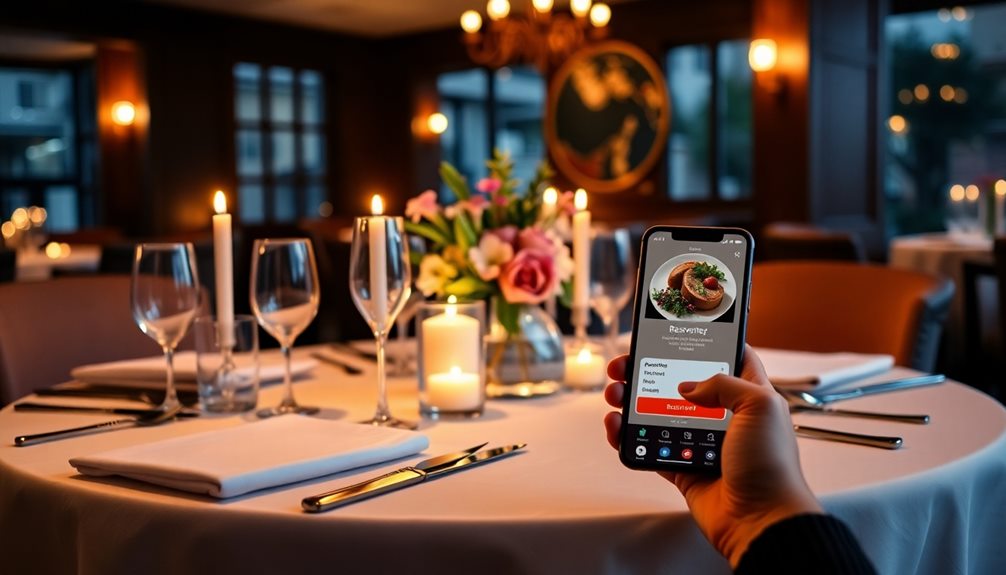
The term exclusive fine dining reservation plans is often misunderstood as a consumer-facing product. In practice, however, it refers to a complex, multi-tiered ecosystem of gatekeepers, private desks, and proprietary scheduling platforms. Consumers frequently conflate the basic concierge services provided by high-tier credit card programs with the deep, institutional-level access utilized by family offices. The former relies on public inventory prioritized for specific cardholders, whereas the latter involves direct, person-to-person negotiation that often happens months or years in advance.
Oversimplification here is dangerous. Indeed, viewing these plans as a simple “concierge add-on” leads to the inevitable failure of expectations. When a reservation is sought at a marquee establishment during peak season, standard “exclusive” channels often encounter the same limitations as the public. Consequently, a true reservation strategy operates on the principle of anticipatory acquisition, securing inventory long before it enters the digital booking window. Ultimately, the core misunderstanding lies in the belief that access is about the request; in reality, access is about the pre-existing alignment between the diner and the restaurant’s operational stakeholders.
Deep Contextual Background
The evolution of dining reservations mirrors the broader trend toward the digitization and subsequent monopolization of high-end experience inventory. Decades ago, securing a table was a localized, trust-based interaction between a regular and a maître d’. Although this localized intimacy guaranteed access, it provided zero global scalability. As global travel exploded, restaurants faced a deluge of demand, prompting the adoption of centralized, software-based booking systems.
While software solved the issue of logistical chaos for the restaurant, it introduced a new friction for the diner: the “digital gatekeeper.” Consequently, the modern era is defined by the struggle to reclaim intimacy within these systems. We have seen the emergence of secondary markets, private memberships, and the professionalization of the restaurant’s own VIP booking desks. Today, the most successful diners manage their culinary landscape by bypassing the digital layer entirely, relying on a hybrid model that combines digital monitoring tools with the old-fashioned, high-touch relationship management that defined the era before automation.
Conceptual Frameworks and Mental Models
-
The Inventory Velocity Model: This framework calculates the time-to-closure for available tables. In elite venues, the velocity is near-instant; therefore, a shift from reactive booking to pre-emptive reservation acquisition is necessary.
-
The Relationship-Capacity Matrix: This model measures the depth of a diner’s footprint at a target venue. Furthermore, it posits that table availability is not a fixed asset but a dynamic variable directly correlated to the diner’s past behavior, patronage history, and interpersonal standing.
-
The Contingency-Access Loop: This is a framework for managing the uncertainty of elite dining. It ensures that for every target reservation, there exists a secondary, high-fidelity contingency, thereby preventing a total loss of the evening’s strategic objective.
-
The Information Symmetry Model: This approach focuses on maintaining transparency between the restaurant’s booking desk and the diner’s representative. Accordingly, it ensures that cancellations or last-minute openings are communicated in real-time.
Key Categories and Operational Variations
The methods for securing high-end tables fall into distinct operational tiers.
| Category | Typical Scope | Institutional Reach | Management Intensity |
| Private Office/Family Office | Bespoke/Deep Access | Absolute | High (Strategy focused) |
| Elite Concierge Programs | Tiered Inventory | Broad/High | Moderate |
| Direct Institutional Desk | Venue-Specific | High | Moderate |
| Algorithmic Monitoring | Public Inventory Tracking | Medium | Low |
For the serious diner, a tiered strategy is essential. Using one method exclusively, such as relying solely on an elite credit card concierge, is a failure of risk management. A resilient strategy involves the simultaneous application of at least two of these categories, layering the brute force of algorithmic monitoring with the precision of relationship-based requests.
Real-World Scenarios and Decision Logic
Consider the “Event-Driven Scarcity” scenario, where a citywide conference or sporting event makes restaurant inventory effectively non-existent. A standard booking agency will report the status as “full.” The decision logic of a seasoned reservation planner involves investigating the restaurant’s “private capacity,” negotiating a table not through the booking portal, but through corporate sponsorship or secondary luxury hospitality partners who control block-booked tables.
In a “Last-Minute Pivot” scenario, where a change in schedule forces an immediate dining requirement in a new location, the failure mode of the amateur is to search open tables. The expert, however, activates the contingency-access loop, leveraging a network of local culinary liaisons who possess the institutional authority to “unlock” a table by shifting internal resources or managing a cancellation from a less-critical patron.
Planning, Cost, and Resource Dynamics
The economic analysis of elite dining is often obscured by the assumption that the costs are strictly menu-based.
-
Direct Costs: Membership fees for private dining clubs, specialized concierge retainers, and the premium for last-minute, high-velocity reservation acquisition.
-
Opportunity Costs: The time lost to administrative searching and the reputational cost of failing to secure a table for a business-critical engagement.
-
Variability: Costs are largely driven by the scarcity of the target. Securing a seat at a venue that books out a year in advance requires a radically different resource allocation than a high-end venue with a 30-day window.
| Planning Component | Cost Range (USD/Year) | Primary Driver |
| Strategic Office Retainer | $50,000 – $250,000+ | Total management depth |
| High-Tier Membership Club | $5,000 – $25,000 | Venue-specific inventory |
| Tactical Concierge Desk | $2,000 – $10,000 | Geographic scale |
Tools, Strategies, and Support Systems
-
High-Frequency Scraping Tools: Software that monitors public and semi-private inventory portals to alert the user of cancellations in milliseconds.
-
Direct-Rights Liaisons: Maintaining personal, direct lines to the maître d’ or general manager of target venues, bypassing the central booking line.
-
Cross-Sector Patronage: Using professional travel agents or hotel management to leverage their internal restaurant relationships to secure priority placement.
-
Reciprocal Hospitality Agreements: Formalizing exchanges with restaurants, where a diner provides value to the venue in exchange for reservation preference.
Risk Landscape and Failure Modes
The primary failure mode is “Relationship Depletion,” where a diner “burns” their access by abusing the privilege,e failing to show, arriving late, or behaving in a way that creates friction for the restaurant staff. A second significant risk is “Institutional Opacity,” where the concierge service makes a promise of access they have no actual power to fulfill, leaving the diner without an alternative on the night of the event. These risks are mitigated through strict adherence to dining etiquette and a focus on long-term relationship cultivation rather than transactional demand.
Governance, Maintenance, and Long-Term Adaptation
A successful dining reservation strategy requires ongoing oversight.
-
Patronage Audits: Quarterly reviews of one’s history at key venues to ensure a consistent, positive presence is maintained.
-
Trigger Points for Adaptation: Shifts in venue popularity or management changes should mandate a re-evaluation of the strategy for that specific location.
-
Layered Checklist: Any comprehensive dining plan must include a documented set of preferred venues, defined contact hierarchies, and pre-authorized budgets for last-minute acquisition.
Measurement, Tracking, and Evaluation
-
Leading Indicators: The success rate of “difficult” reservation requests; the number of venues where the staff recognizes the diner by name or preference history.
-
Lagging Indicators: Total successful bookings versus total requests; the ratio of primary to contingency options successfully executed.
-
Documentation Examples: Patronage logs, preference profiles (noting seating preferences, dietary history, and staff interactions), and strategic post-event debriefs.
Common Misconceptions and Oversimplifications
-
Myth: “Everything is available for the right price.”
Correction: Access to the world’s most elite tables is strictly non-monetary; reputation and established patronage outweigh cash. -
Myth: “Digital booking platforms have democratized access.”
Correction: They have commoditized the baseline, but the “best” tables have become more opaque and relationship-reliant than ever. -
Myth: “Being a VIP means you don’t have to plan.”
Correction: True VIP access requires even more rigorous, advanced-level planning than a standard reservation. -
Myth: “One concierge covers everything.”
Correction: No single entity covers the globe; strategic access requires a network of regional specialists.
Ethical, Practical, and Contextual Considerations
The practical reality of these reservation plans is the necessity for discretion and mutual respect. Elite dining is a social contract; the restaurant provides the environment and culinary excellence, and the diner provides the comportment and patronage that justifies the priority placement. Ethical behavior involves never compromising the restaurant’s operations or staff to secure a table. A truly elite diner understands that they are a guest, not an owner, and that the privilege of priority access is a fragile asset that must be protected through consistent, professional conduct.
Conclusion
Mastering the landscape of culinary access is a disciplined endeavor that bridges the gap between simple consumption and strategic experience management. By acknowledging that access is a variable, not a guarantee, diners can move toward an architecture of resilience, ensuring their requirements are met regardless of venue popularity or seasonal scarcity. The selection and management of one’s exclusive fine dining reservation plans is an investment in institutional reputation and long-term leverage. Ultimately, the most sophisticated diner is not the one who knows which button to click, but the one who understands how to build a durable, mutually beneficial presence within the restaurants that matter most to their personal and professional objectives.