Premium Event Access Plans: A Definitive Strategic Guide
The landscape of high-status engagement has undergone a radical transformation over the past decade. Where once the attainment of proximity to exclusive gatherings, sporting championships, and cultural summits was a matter of social capital or opaque, invitation-only channels, it has now evolved into a structured, tiered industry. The democratization of information has paradoxically spurred a greater demand for gatekept experiences, leading to the rise of sophisticated management systems designed to facilitate entry for high-net-worth individuals and corporate entities alike.
This evolution is not merely a reflection of changing consumer preferences; it mirrors the broader shift in how value is perceived in a hyper-connected, digital-first economy. When authentic, in-person experiences become increasingly rare, the logistical ability to secure access becomes a form of currency. This reality has necessitated the development of premium event access plans, which seek to standardize what was once a highly erratic, relationship-dependent process. These systems are no longer just about the ticket; they are about the mitigation of effort and the assurance of quality in an increasingly volatile global event market.
Understanding these mechanisms requires an analytical perspective that transcends the surface-level marketing of “luxury” and “exclusivity.” It demands an examination of the structural barriers to entry, the fluidity of secondary market pricing, and the operational rigor required to provide genuine, reliable access to the world’s most sought-after engagements. This inquiry seeks to provide that structural overview, serving as a definitive guide to the mechanics of high-level engagement management.
Understanding “premium event access plans.”
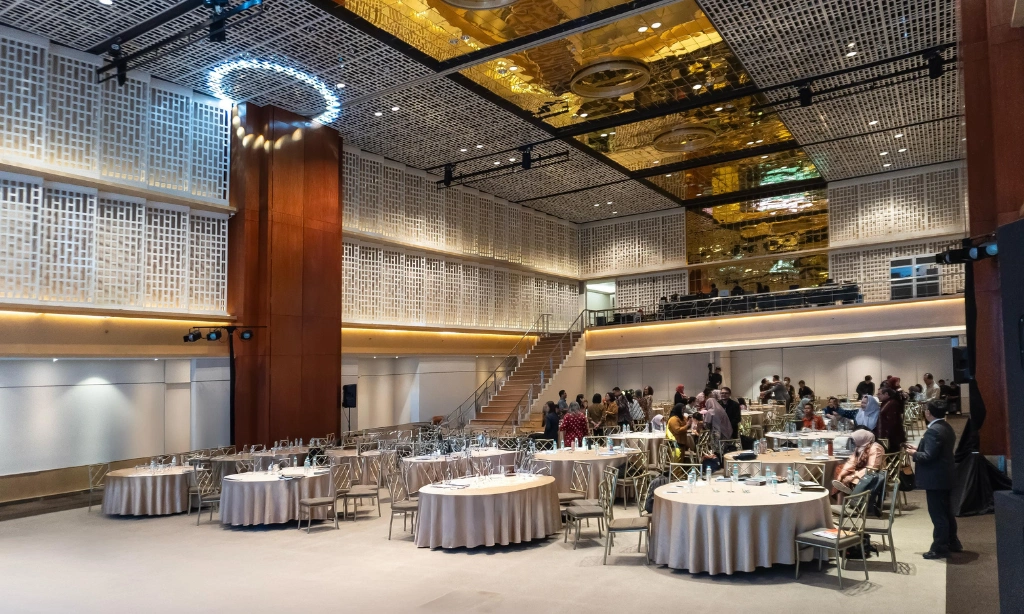
The terminology of premium event access plans often masks a complex reality. These are not merely financial products; they are institutionalized logistical frameworks. At their core, they represent an attempt to resolve the inherent inefficiency of the “event market,” where demand for finite, high-prestige experiences far outstrips the visible supply. A common misunderstanding involves conflating these plans with standard VIP hospitality packages. While hospitality may be the delivery mechanism, the “access plan” itself is the underlying layer of intelligence, the ability to identify, secure, and verify authentic entry where others see only a “sold out” notice.
The risk of oversimplification is profound. When stakeholders treat access as a binary commodity, either you have the ticket, or you don’t, they overlook the nuanced, relational, and technological layers that govern the movement of these assets. A truly robust access framework integrates predictive modeling, direct institutional relationships, and rapid-response logistical support. It requires an understanding that the event market is inherently asymmetrical. The most capable plans do not just respond to public sales; they operate within the “shadow market” of pre-allocation, sponsorship tranches, and institutional block-holds, often securing placement long before the public has visibility on a seating chart.
Deep Contextual Background
Historically, elite event attendance was a function of social hierarchy. The “gatekeeper” was a literal person, such as a club secretary, a board member, or a well-connected concierge. The system relied on trust and duration. As globalization accelerated and the middle class expanded, the demand for status-symbol events ballooned. The traditional gatekeepers were overwhelmed, leading to a decade of market instability, the rise of predatory secondary ticketing, and a degradation of the “premium” experience.
The digital transition initially exacerbated this. Automated bots and global aggregators stripped away the human elements of the industry, commoditizing access and causing price volatility that undermined the reliability of corporate planning. The recent return to high-touch, concierge-driven mode in the modern premium event access plans is a structural correction. It acknowledges that for the highest echelons of engagement, software alone cannot bridge the gap between “official allocation” and “desired outcome.” We are currently in a hybrid era where technology provides the data, but human, institutional authority provides the access.
Conceptual Frameworks and Mental Models
-
The Accessibility-Volatility Trade-off: A model measuring the inverse relationship between the ease of securing an event and the stability of the price. The higher the prestige, the more volatile the acquisition process.
-
The Proximity-Prestige Gradient: A framework for evaluating the “value” of a seat. It suggests that value is not linear but exponential, where a marginal increase in physical proximity to the action yields a significant increase in social or business leverage.
-
The Institutional Block-Hold Logic: A model used to understand the supply-side mechanics. It identifies how large quantities of premium seats are removed from public channels before they ever reach the market.
-
The Friction-Capital Equilibrium: A concept describing the amount of effort (friction) a user is willing to delegate (capital) to ensure the guarantee of an event outcome.
Key Categories and Operational Variations
Access models can be broadly categorized by their relationship to the primary rights-holder.
| Category | Source of Access | Reliability | Cost Profile |
| Official Sponsorship | Direct (Primary Rights) | Absolute | High (Capital Commitment) |
| Institutional Retainer | Partner Network | High | Medium/Fixed |
| Secondary Market Aggregator | Open Marketplace | Moderate/Variable | High/Market-Driven |
| White-Glove Brokerage | Bespoke Acquisition | High | Premium + Fee |
The decision logic for choosing a model rests on the user’s risk tolerance. Corporate entities needing guaranteed outcomes for high-stakes business hosting must utilize the Institutional Retainer or Sponsorship models. Individual users or firms with higher flexibility might leverage Brokerage or Aggregator models, accepting the attendant volatility in pricing.
Real-World Scenarios and Decision Logic
Consider the “Corporate Host/Client Crisis.” A firm has promised a client entry to a major global final, but the public ticket release failed due to a technical error. The failure mode of standard access is total loss of reputation. The premium event access plans’ logic dictates an immediate, pre-funded “recovery reserve” protocol: engaging specialized, institutional partners who hold, by contract, priority access reserves. The decision point is whether the cost of this reserve is baked into the annual budget as an insurance premium.
Another scenario is “The Last-Minute Itinerary Shift.” An executive’s schedule changes, necessitating entry to a sold-out conference in a new location. The standard reaction is to hit the secondary market, which introduces security and authenticity risk. The superior decision logic relies on a pre-existing “lifestyle desk” relationship, where the desk utilizes its own verified inventory or its institutional clout with the event organizers to negotiate a seat directly, ensuring 100% authenticity.
Planning, Cost, and Resource Dynamics
The economic management of access requires an appreciation that cost is driven by scarcity, not just demand.
-
Direct Costs: Retainer fees, membership dues, and the actual purchase price of the access rights.
-
Opportunity Costs: The time lost navigating unreliable, low-quality channels, which can result in the loss of key business relationship outcomes.
-
Variability: Costs fluctuate wildly based on the “Prestige-Proximity” factor. An event in an intimate, high-status venue will always command a higher premium than a stadium event, regardless of the sport or cultural activity.
| Planning Component | Cost Range (USD/Year) | Variability Driver |
| Executive Concierge Plan | $15k – $50k | Depth of access reach |
| Corporate Global Tier | $100k – $500k+ | Scale of event portfolio |
| Ad-Hoc Bespoke Entry | $5k – $50k/event | Proximity of acquisition |
Tools, Strategies, and Support Systems
-
Direct-Rights Liaison: An in-house or contracted team member whose sole job is maintaining relationships with event rights-holders.
-
Predictive Inventory Tracking: Software that monitors the lifecycle of high-demand events, flagging potential block-hold release windows.
-
Vetted Verification Networks: Establishing a closed-loop system of suppliers where authenticity is guaranteed by long-term financial covenants.
-
Strategic Multi-Tier Budgeting: Creating a budget that distinguishes between “guaranteed access” events and “opportunity” events, allowing for agile capital allocation.
Risk Landscape and Failure Modes
The primary failure mode is “Counterparty Fragility,” where a service provider promises access they cannot legally or operationally deliver. This is compounded by the risk of “Information Opacity,” where the buyer is unaware that they have been sold a sub-tier experience (e.g., restricted view, non-club access) despite paying top-tier prices. Another risk is “Regulatory/Legal Exposure,” particularly in jurisdictions where the secondary market is heavily scrutinized or outright illegal. These risks are best managed through rigorous contract audits rather than relying on the “reputation” of the seller.
Governance, Maintenance, and Long-Term Adaptation
A successful system requires ongoing oversight to prevent the degradation of service quality.
-
Quarterly Review Cycles: A formal assessment of the “access conversion rate, ” e.g., how often the service provider successfully delivered on requested high-prestige events.
-
Adjustment Triggers: If a key provider fails to deliver twice in a single calendar year, it should trigger an automatic contract review and potential search for a more reliable partner.
-
Layered Checklist: Any governance plan must include: verification of the provider’s primary-allocation relationships, proof of financial solvency/bonding, and independent verification of ticket authenticity protocols.
Measurement, Tracking, and Evaluation
-
Leading Indicators: The speed and success rate of pre-emptive inquiries into event availability six months in advance.
-
Lagging Indicators: The total cost of acquisition vs. the projected value of the business engagement outcome.
-
Documentation Examples: Performance logs (request-to-delivery time), authenticity audit records, and “value-impact” statements provided by the internal stakeholders who used the access.
Common Misconceptions and Oversimplifications
-
Myth: “All access is available for a price.”
Correction: Some access is strictly governed by social or political criteria that no amount of capital can bypass. -
Myth: “The most expensive option is the most reliable.”
Correction: High cost is often a signal of aggressive margin-taking, not necessarily a signal of deeper institutional relationships. -
Myth: “Digital platforms have democratized access.”
Correction: They have merely commoditized the low-end, making the high-end access more opaque and gatekept than ever. -
Myth: “You can manage high-level access as an ad-hoc task.”
Correction: Ad-hoc management is the surest route to catastrophic failure during high-stakes business hosting.
Ethical, Practical, and Contextual Considerations
The practical reality of these services often rubs against the democratic ideal of “first-come, first-served.” It is an industry built on the deliberate limitation of supply. Practically, this requires a level of discretion; the most sophisticated users of premium event access plans do not broadcast their means of entry. Contextually, one must recognize that high-level event access is a tool of relationship maintenance. The ethical onus is on the user to ensure that the access is used for legitimate business or personal development, rather than unethical influence-peddling, which could create significant legal and reputational liability.
Conclusion
The pursuit of elite-level engagement is a logistical challenge that mirrors the complexity of the global business environment. By acknowledging that access is a structured, institutionalized, and high-risk field, organizations and individuals can begin to replace haphazard, reactive booking with purposeful, resilient management. The implementation of robust premium event access plans serves as the bridge between the demand for proximity and the reality of a finite, gatekept market.
This shift requires not just capital, but the institutional discipline to audit the source of one’s access, verify the authenticity of the product, and build the relationships required to secure placement in a world that is increasingly defined by its borders. As the premium event market continues to mature and consolidate, the advantage will inevitably accrue to those who view access not as a cost, but as a strategic asset to be managed with the same rigor as any other institutional resource.