
Common Black Card Membership Mistakes: A Pillar Guide
The rarefied air of “black card” or ultra-high-net-worth (UHNW) credit card membership is often obscured by a thick fog of marketing mythology. To the uninitiated, these instruments represent the pinnacle of status and unlimited financial access; to the seasoned financial steward, however, they are merely highly specific, high-cost tools that require surgical precision in their deployment. The gap between these two perspectives is where the most significant operational failures occur. When individuals treat these financial products as passive status symbols rather than active logistical assets, they inevitably fall into a cycle of underutilization and value erosion.
The complexity of these memberships, marked by opaque invite-only requirements, substantial annual retainers, and highly specific benefit structures, creates a uniquely challenging environment for the user. Most holders are so preoccupied with the prestige associated with the card that they neglect the fundamental administrative duty required to make the math work. In reality, these cards are not “magic wands” of convenience; they are rigid contracts. Failure to understand the nuance of their reward mechanics or the hidden constraints on their concierge services is not merely a missed opportunity; it is a direct financial loss.
This article serves as an analytical framework for dissecting the operational life cycle of premium financial instruments. It moves beyond the hype to examine the systemic errors that render these cards a liability rather than an asset. By adopting a posture of extreme clarity, users can avoid the most persistent traps and ensure that their financial tools serve their primary objectives: the optimization of capital, the facilitation of seamless travel, and the preservation of administrative bandwidth.
Understanding “common black card membership mistakes.”
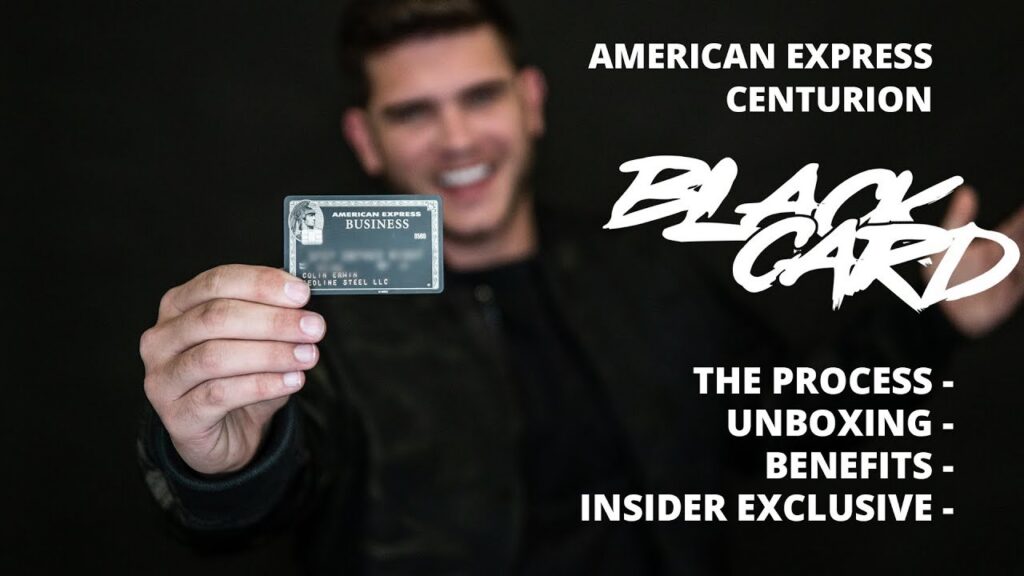
When examining common black card membership mistakes, the most frequent error is the misalignment of the card’s specific value proposition with the user’s actual lifestyle. A card designed for the frequent international traveler is systematically useless to an individual whose primary activity is local, domestic business. The “prestige factor” often masks this misalignment, leading users to pay exorbitant annual fees for services they never access. Oversimplification here is rampant; people assume all “black” or “metal” cards are created equal, failing to realize that each is a specialized instrument tailored to a distinct psychological and financial profile.
Another failure point is the “concierge dependency” trap. Users often view the included concierge service as a replacement for their own personal assistant, forgetting that the bank’s concierge is limited by the bank’s own vendor relationships. They do not possess omnipotence, and they are rarely the most cost-effective solution for complex logistics. By offloading sensitive, high-stakes tasks to a generic call center, the member introduces a layer of third-party fragility that can, and frequently does, break down at the worst possible moment.
The Historical and Systemic Evolution of Premium Credit
The evolution of the premium card began in the 1980s with a focus on simplicity: a charge card that offered high spending limits and basic security. The modern iteration, however, is a product of “lifestyle engineering.” As global wealth grew, banks realized they could capture a greater share of wallet by bundling peripheral services, such as airport lounge access, private club memberships, and specialized insurance, into the card’s annual cost.
This shifted the paradigm from a purely financial tool to an “lifestyle ecosystem.” Banks are now selling access to a network of partners, not just credit. Understanding this is key to avoiding the most common black card membership mistakes, as the user must now manage a network of secondary benefits rather than just a credit line. The systemic risk is that the bank’s interests are aligned with retention, not with the member’s actual efficiency or cost savings.
Conceptual Frameworks for Financial Asset Management
-
The “Utilization vs. Fee” Parity Index: Calculate the dollar value of the tangible, cash-equivalent benefits (not the “soft” status benefits) that you actually use. If this value does not consistently exceed the annual fee, the membership is an active net loss.
-
The Vendor-Access Framework: Recognize that the card’s benefits are often delivered through third-party vendors. The bank is merely the gateway. Your quality of service is dictated by the vendor’s performance, not the card’s brand.
-
The Administrative Threshold: Identify which tasks require a personalized human assistant and which can be offloaded to the bank’s concierge. Never delegate high-stakes, time-sensitive, or highly idiosyncratic requests to a generic bank service.
Categories of Membership Fragility
| Fragility Category | Manifestation | Mitigation |
| Feature Bloat | Paying for benefits you never use | Annual audit of benefits consumed |
| Vendor Dependency | Reliance on the bank’s preferred partners | Building your own independent network |
| Churn Blindness | Assuming rewards never expire | Quarterly review of point/reward status |
| Concierge Gap | Expecting tailored, expert knowledge | Use the concierge only for generic bookings |
Real-World Scenario Modeling
Scenario 1: The “Elite Status” Fallacy
A member chooses a black card because it offers “automatic hotel elite status.” However, the traveler prefers a different hotel chain that is not part of the card’s partnership network.
-
Decision Point: Acknowledge the mismatch. Either switch travel preferences to leverage the card, or accept that the benefit is void and seek a card that aligns with preferred partners.
-
Failure Mode: Continuing to stay at the non-preferred hotel while paying for a card that offers no utility, effectively paying a premium for a “phantom benefit.”
Scenario 2: The Concierge “Blackout”
A member attempts to book a high-demand, last-minute event through the card’s concierge, assuming their status will grant them access. The concierge fails to deliver.
-
Decision Point: The concierge is an assistant, not a miracle worker. Maintain an independent, professional network for high-stakes bookings.
-
Second-Order Effect: When the concierge fails, the member blames the card, but the fault lies in the improper delegation of a critical task.
Resource Dynamics and Hidden Operational Costs
| Resource | Hidden Cost | Mitigation |
| Concierge Time | Opportunity cost of bad coordination | Direct interaction for complex needs |
| Reward Points | Opportunity cost of inflation/devaluation | Rapid conversion/redemption |
| Annual Fee | Capital lost to “prestige” premiums | Annual ROI assessment |
Operational Tools and Support Systems
-
Direct-Feed Expense Tracking: Use digital ledger tools that automatically categorize and track benefits to visualize your ROI in real-time.
-
Redundancy Protocols: Never rely solely on a black card for high-stakes travel or financial transactions. Always maintain a “primary” backup instrument that operates on a different payment network.
-
The Benefit “Source of Truth”: Maintain a private, updated document that tracks the specific terms of your benefits—not the marketing materials, but the fine print.
The Risk Landscape: Failure Modes and Compounding Risks
The most dangerous failure mode is “The Passive Membership State.” This occurs when the user pays the fee, keeps the card in their wallet, and forgets to actively manage the rotating schedule of benefits, expiring credits, and partnership updates. The compounding effect is a massive, silent drainage of wealth over the years. When the user finally audits the card, they often find they have “lost” thousands of dollars in unused credits and rewards that have simply evaporated due to inactivity.
Governance, Maintenance, and Long-Term Adaptation
Treat your credit card portfolio as a professional department. Perform a “membership audit” twice a year. Check for:
-
Benefit Devaluation: Has the bank quietly reduced the utility of your primary rewards?
-
New Utility: Are there new partnerships you are ignoring?
-
Strategic Alignment: Has your lifestyle changed enough that this instrument no longer makes financial sense?
Metrics for Quantitative and Qualitative Evaluation
-
Net Benefit Ratio: Total cash-equivalent value of utilized rewards divided by total annual fee.
-
Concierge Success Rate: The percentage of requests fulfilled exactly as intended on the first pass.
-
Time-Cost of Management: The hours spent managing the card’s features vs. the dollar value of the return.
Common Misconceptions and Oversimplifications
-
Myth: “The bank will treat me better because of the color of my card.”
-
Correction: The bank treats you according to your creditworthiness and your profitability; the card is simply an indicator of the latter.
-
Myth: “Black card concierge can fix anything.”
-
Correction: They are call-center operators with a phone book. They cannot navigate complex social hierarchies or secure what is physically impossible.
-
Myth: “I am ‘winning’ because I have a high-status card.”
-
Correction: You are winning only if your ROI is positive.
Ethical and Contextual Considerations
The ethics of premium finance center on the avoidance of “lifestyle inflation.” The desire to feel that one has “arrived” via the possession of a status symbol is a psychological trap that costs billions globally. Use these cards as efficient financial tools—never as a validation of self-worth. If the card begins to dictate your spending habits (by nudging you toward unnecessary travel or premium partners), the card has successfully inverted the principal-agent relationship.
Conclusion
Successfully avoiding common black card membership mistakes requires the recognition that these instruments are fundamentally tools for the efficient management of capital, not markers of personal achievement. They are complex, high-friction contracts that yield high returns only to those who govern them with professional rigor. By removing the emotional weight of status from the equation and focusing solely on the ROI of the benefits, the UHNW individual transforms a potentially expensive liability into a finely tuned logistical asset. The ultimate measure of sophistication is not the ability to obtain the card, but the ability to extract genuine, quantifiable value from it without allowing the marketing to dictate one’s behavior.