How to Manage High Profile Security Risks: A Comprehensive Guide
The protection of high-profile individuals, be they public figures, corporate leaders, or ultra-high-net-worth families, has transcended the era of static bodyguards and perimeter fencing. In an age of unprecedented information ubiquity and sophisticated cyber-physical threats, security is no longer a localized function of muscle and steel; it is a pervasive, data-driven discipline that requires the integration of intelligence, logistics, and behavioral science. True safety for those in the public eye is not the absence of threat, but the managed existence of it through deliberate, proactive mitigation.
Security, when applied to a high-profile life, is inherently a trade-off. Every layer of protection adds friction to the subject’s daily life, creating a tension between the need for autonomy and the necessity of defense. The most effective security architectures are those that remain largely invisible, weaving protection into the fabric of one’s routine so seamlessly that the quality of life is enhanced, not stifled. This requires a transition from reactive, event-based security to a holistic, intelligence-led posture.
This guide explores the systemic requirements for identifying, assessing, and neutralizing hazards in a volatile environment. It is designed for those who recognize that safety is a professional responsibility, not a luxury purchase. By understanding the underlying vectors of risk—from digital surveillance to physical stalking one can construct a defensive perimeter that is both resilient to external disruption and compatible with the complexities of a public-facing existence.
Understanding “how to manage high-profile security risks.”
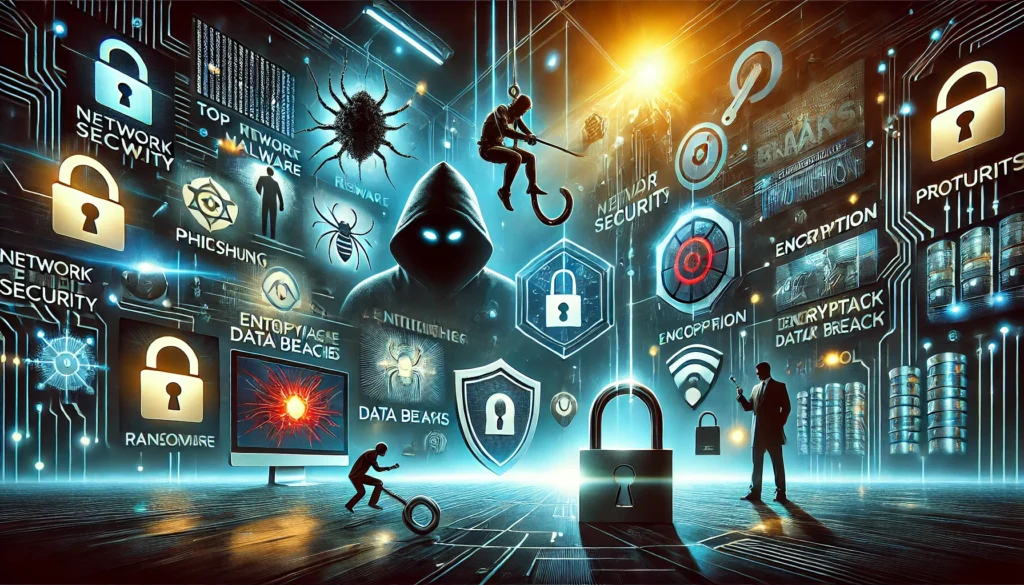
The primary hurdle in addressing how to manage high-profile security risks is the tendency toward binary thinking. Security is often perceived as either “present” or “absent,” whereas in reality, it is a spectrum of probability and consequence. A high-profile individual is always a target; the goal is not to eliminate this reality, but to influence the attacker’s perception of cost versus reward. If the cost of an attack (the effort, the probability of failure, the risk of identification) is made to appear prohibitively high, most threats will self-select out.
Common misunderstandings include the assumption that physical security can compensate for poor digital hygiene. In the contemporary environment, an adversary rarely attacks a hard target directly. They exploit the softest vector, which is often an exposed digital footprint, a compromised home network, or an untethered social media presence. To effectively manage these risks, one must view the digital and physical domains as a single, unified landscape where a leak in one can lead to a catastrophic compromise in the other.
Historical Evolution of Personal Protection
The craft of protection has matured from the “praetorian” model, the physical shielding of the elite by a small cadre of protectors, into the modern “integrated threat management” model. For most of history, protection was reactive and localized. The 20th century, particularly with the advent of rapid transit and mass media, forced a shift toward logistical planning and route sanitization.
In the early 21st century, the proliferation of digital intelligence and open-source surveillance tools fundamentally altered the landscape. Today, the most significant threats often originate from “distance actors,” individuals who may never come within a mile of their subject but can cause immense harm through reputational destruction, data theft, or orchestrated online harassment. This evolution necessitates a shift from purely protective operations to comprehensive intelligence gathering and digital defense.
Conceptual Frameworks and Mental Models
-
The Concentric Circles of Protection: Imagine security as a series of nested zones, digital, residential, travel, and personal. Each circle must be independently robust, yet integrated. A failure in the digital zone should be mitigated by resilience in the physical zone.
-
The Attack Lifecycle: Every threat follows a pattern: Target selection, surveillance, capability acquisition, testing, and execution. If an organizer can identify and disrupt the surveillance phase, the remaining cycle is effectively aborted.
-
The Friction-Security Equilibrium: Security protocols that cause excessive friction are ignored or bypassed. The mental model must be to design security that is easy to follow and hard to abuse, maximizing compliance through user-friendly design.
Categories of Threat and Defensive Trade-offs
| Threat Vector | Defensive Strategy | Potential Trade-off |
| Digital Surveillance | Data obfuscation/Privacy scrubbing | Loss of social/professional presence |
| Physical Stalking | Perimeter control/Close protection | Limitations on mobility/spontaneity |
| Reputational Harm | Proactive communication/Monitoring | Constant need for public relations management |
| Information Leakage | “Need-to-know” access control | Reduced collaboration/internal friction |
Real-World Scenario Modeling
Scenario 1: The Public Appearance
A high-profile executive is scheduled for a keynote speech.
-
Constraint: The event must remain open to the public for brand purposes.
-
Decision Point: Instead of locking down the venue, the security team performs “site sanitization” and secures a secondary, restricted-access egress point.
-
Failure Mode: If the team fails to account for the transit path between the exit and the vehicle, the vulnerability is at its peak.
Scenario 2: The Digital Compromise
A family member’s personal device is compromised via a sophisticated phishing campaign.
-
Decision Point: Immediate isolation of the device from the primary home network and forensic review to ensure no persistence (malware).
-
Second-Order Effect: The psychological impact of the intrusion often leads to a sudden, often uncoordinated, “locking down” of all social profiles, which in itself can act as a trigger for further interest.
Planning, Cost, and Resource Dynamics
| Service Tier | Focus Area | Cost Variability |
| Tier 1 (Core) | Threat intelligence/Cyber hygiene | Baseline (Predictable) |
| Tier 2 (Operational) | Physical security/Travel protection | Moderate (Event-based) |
| Tier 3 (Specialized) | Executive protection/Forensics | High (Variable) |
Tools, Strategies, and Support Systems
-
Open-Source Intelligence (OSINT) Monitoring: Automated tools that scan the deep web and social media for mentions or patterns of interest surrounding the subject.
-
Red Teaming: Regularly hiring external experts to attempt a breach of the digital or physical systems to find weaknesses before an adversary does.
-
Secure Communication Architecture: Using encrypted, ephemeral messaging platforms for all sensitive professional and family communication.
Risk Landscape and Failure Modes
The primary taxonomy of failure is human-centric. Technologies can be hardened, but human psychology—the desire for convenience, the belief in “it won’t happen to me,” and social engineering remains the weakest link. Compounding failures occur when a technological oversight is ignored, allowing a bad actor to gain a foothold that is later leveraged to bypass physical barriers.
Governance, Maintenance, and Long-Term Adaptation
Security is not a project; it is a lifecycle. Every six months, conduct a comprehensive audit of the security posture. Are the threats still the same as they were a year ago? Has the subject’s profile shifted in a way that necessitates new protections? A layered checklist—covering digital, travel, and residential systems must be refreshed and validated against changing threat vectors.
Metrics for Performance Evaluation
-
Detection Time: How long does it take for a potential threat to be identified?
-
Response Agility: The speed at which security protocols can be pivoted in response to a changing situation.
-
Compliance Rate: Percentage of stakeholders who adhere to established security protocols.
Common Misconceptions and Oversimplifications
-
Myth: “I am too small to be a target.”
-
Correction: Vulnerability is determined by one’s assets, not one’s public reach.
-
Myth: “Hiring professional security is enough.”
-
Correction: Security is a collaboration; if the principal does not adhere to the protocols, the security team is effectively working with one hand tied behind their back.
Ethical and Contextual Considerations
The preservation of security should not necessitate the total sacrifice of one’s public identity. Ethical security management balances the need for protection with the fundamental human right to engage with the world. Excessive security measures that isolate the individual can create a mental health burden that is as damaging as any external threat.
Conclusion
Understanding how to manage high-profile security risks is, at its heart, an exercise in discipline and strategic anticipation. It requires the acceptance that the world is a complex, unpredictable environment, and that safety is an ongoing process of adjustment and refinement. By investing in resilient systems, fostering an intelligence-based mindset, and maintaining a clear view of the threat landscape, individuals can navigate high-profile lives without conceding their security or their humanity to fear. Effectiveness is found in the synthesis of intelligence, technology, and the steady, human judgment that directs them.